
Prakash Javadekar enjoys being information and broadcasting and parliamentary affairs minister, but heading the green ministry is turning out to be thornier than he had expected.
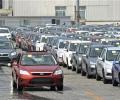
Second body blow after diesel ban on engines of 2,000 cc and above in NCR.

'The darkest days of Indian democracy were (during) the Emergency when basic democratic rights were suspended. For a time it seemed as though India would move along the East Asian model -- everybody works hard, nobody asks questions, certainly not of the government.' 'There are people who say we are headed that way, but I am not persuaded by the evidence,' says Mahesh Rangarajan who recently resigned as director of the Nehru Memorial Museum and Library in New Delhi.

'I can assure you the Ganga will be more polluted in 2030 than it is now.' 'What they are trying to do now is clean the Ganga without understanding how to do so.'

Since many of Modi's urban policies were initiated in Ahmedabad, the city may act as a template to examine what can be expected in a country that is witnessing the biggest migration from rural to urban areas in the world

The challenges authorities face in cleaning Ganga and other holy rivers in Varanasi.

Mukund Rajan, who worked closely with Ratan Tata, recalls the unique experience of working with the corporate titan.

'The number of deaths attributable to warming is likely to rise in the future.'

Volkswagen is under huge pressure to act, with its shares down more than a third in value since the crisis broke, and the bad news still coming.
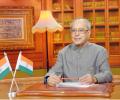
'If the institutions of democracy are under pressure, it is time for serious thinking by the people and their parties. The correctives must come from within.'

Your choice should be based upon your strengths and goals.
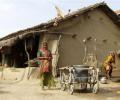
Armed with green nod and fund infusion, Gujarat govt getting ready to issue tenders to build infrastructure at the mega investment region
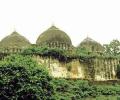
'People beat their chests when the Babri Masjid was brought down, not realising that it was just one event in a chain going back centuries; to look at the last link or two in isolation is absurd.'
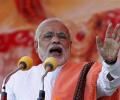
Most top industrialists rate PM's first 100 days in office as 'good', primarily due to his intentions, not concrete policy measures.

With facts and figures, the CAG report has highlighted how Gujarat was far from a role model for states across India, and that the progress made in this province in western India in improving agriculture, education, healthcare and empowerment of women and children, was not exactly creditable, says Paranjoy Guha Thakurta.

'Drought in the 1990s was essentially the drought of a poor India.' 'This 2016 drought is of a richer and more water-guzzling India.' 'The severity and intensity of the drought is not about lack of rainfall.' 'It is about the lack of planning and foresight, and criminal neglect.'
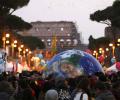
We are witnessing a new phase where business leaders are realising globalisation has to take into account national identities and cultures, says Claude Smadja.
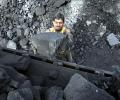
Finance Minister Arun Jaitley has said the larger interest of the public sector would be fully protected.
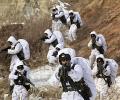
In all the noise surrounding the Dok La confrontation, Claude Arpi focuses on a crucial issue that has hardly been covered -- the construction of roads for the armed forces and the local population to reach the most remote border posts.
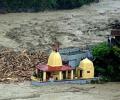
There are lessons to be learnt from the Uttarakhand tragedy. Topping the list is the need to immediately stop mindless construction activity in the Himalayan hills, says Nitish Priyadarshi

Shekhar Chakravarty has developed and patented Curvo -- world's first non-linear ropeway system.

'Disparity is not only in Mumbai; you see it in every city. The other day, I saw right next to the mansion of Mukesh Ambani worth Rs 5,000 crore for one family, thousands of people sleeping on the pavement. This is the urban India you have created!'


'The worst case scenario is for China to behave like a bull in China shop, and brazenly and wantonly indulge in further encroachments, create obstacles to free navigation and convert SCS into an Air Defence Identification Zone.'

The horrific disaster that has struck Uttrakhand has been assessed as a mix of natural and man-made. In fact, the various media analyses indicate we were asking for it and there were enough warnings and indications that this would happen, says Lt Gen (retd) Prakash Katoch.

Creating many more half-decent jobs for the 10 million plus new entrants to the labour force each year must surely constitute the primary development challenge for India today.
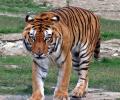
'We are rushing to 'develop' without carefully valuing natural areas.' 'With careful land use planning and scientific zonation at least 5 to 10 per cent of the country's land can be secured for tigers and other such species, and another 5 to 15 per cent kept under low-impact uses to support biodiversity that can coexist with human uses.'

Despite the recent electoral reverses, Rahul is getting ready to walk the fire once more. The question is whether he will get burned or burnished in the process, says Saroj Nagi.

Meet Cassie de Pecol, a 27-year-old traveller from Connecticut, United States, who visited 196 countries in 18-and-a-half months, making her the fastest person to visit every country in the world.

This is the joint statement issued by the ministry of external affairs on the visit of US President Barack Obama to India.

The public-private partnership model is a compulsion, says the minister.

President Pranab Mukherjee on Monday addressed the first joint sitting of Parliament as mandatorily required under the Constitution after the general elections. The address is the political, economic and foreign policy road map of the Narendra Modi government and covers virtually all crucial areas.
 © 2026 Rediff.com - Advertise with us - Disclaimer - Privacy Policy - Sitemap - Feedback - About us - Terms of use - Grievances